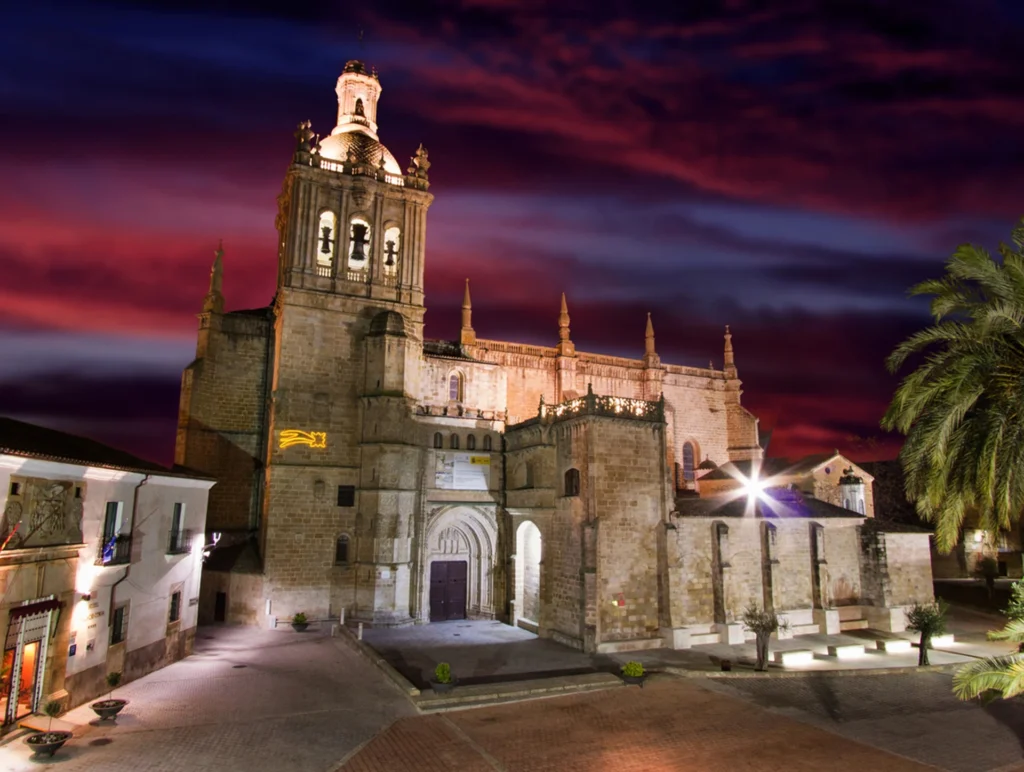
Within the cathedral complex are concentrated the spaces most directly linked to worship and the administration of the Chapter, while numerous surrounding constructions emerged to meet different needs. This is the case in Coria, where around its Cathedral we find the Episcopal Palace, the Seminary, the Hospital of Saint Nicholas of Bari, and many other sites resulting from the initiatives of its bishops throughout history, creating a distinctive urban layout.
These buildings have served as a means of preserving diocesan identity and history, as demonstrated by the presence within their walls of relics, tombs of bishops, and those of the most illustrious local figures and lineages. In this case, we may refer to the Choir located at the center of the nave in accordance with Hispanic tradition; the choir stalls for the canons and the Bishop’s seat, featuring a relief of Christ blessing; the sacred pathway connecting it to the main chapel area; the Chapel of Saint Peter of Alcántara (patron of the Diocese, Extremadura, and the City of Coria); the cloister and the baptistery; the organs; the chapel and balcony of the relics; the mausoleums of its bishops; the outstanding documentary collection of the chapter archive… and many other details that more than justify a visit to Coria.